Edge Effects: Multispecies Methods at the Boundary
Ars Biologica Independent Studies (ABIS) field workshop 2026.
–
31 May Sun 18:00 CEST
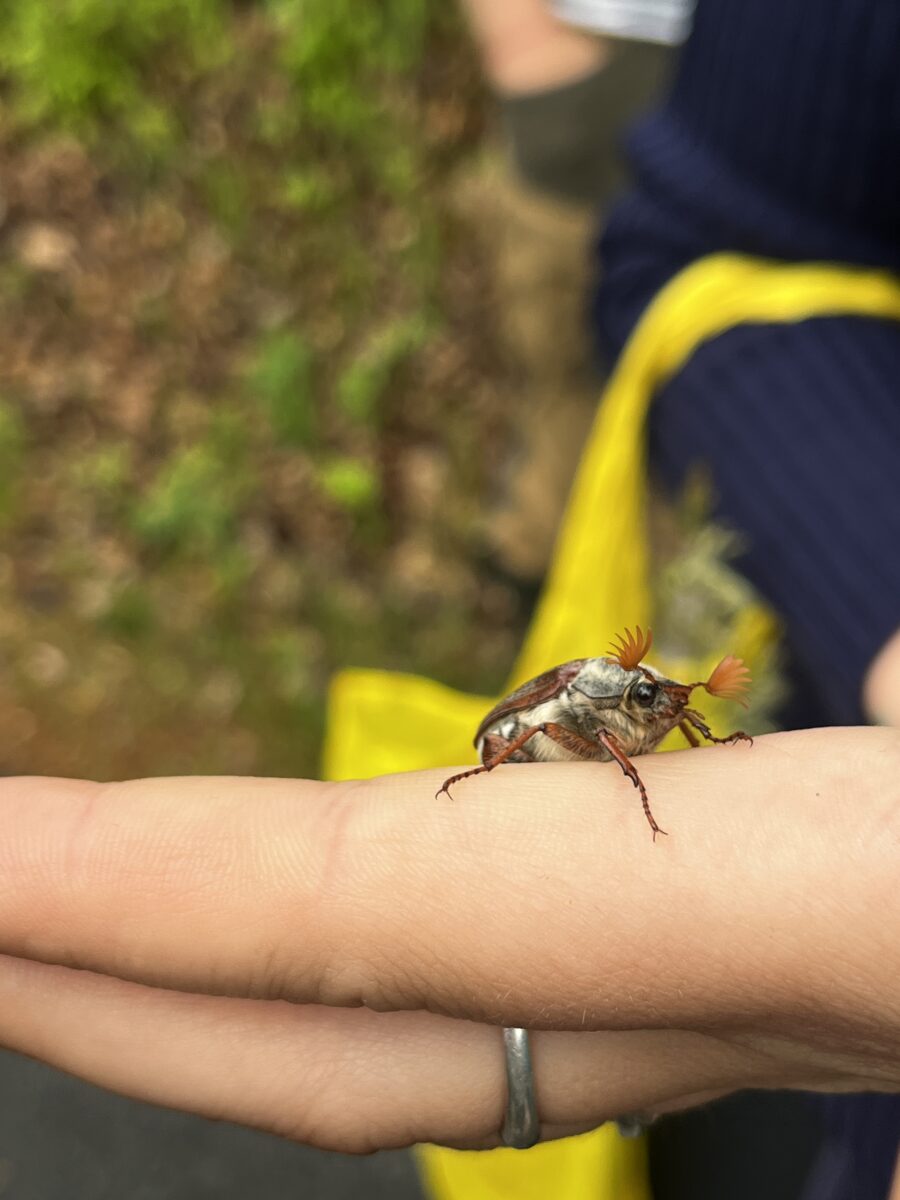
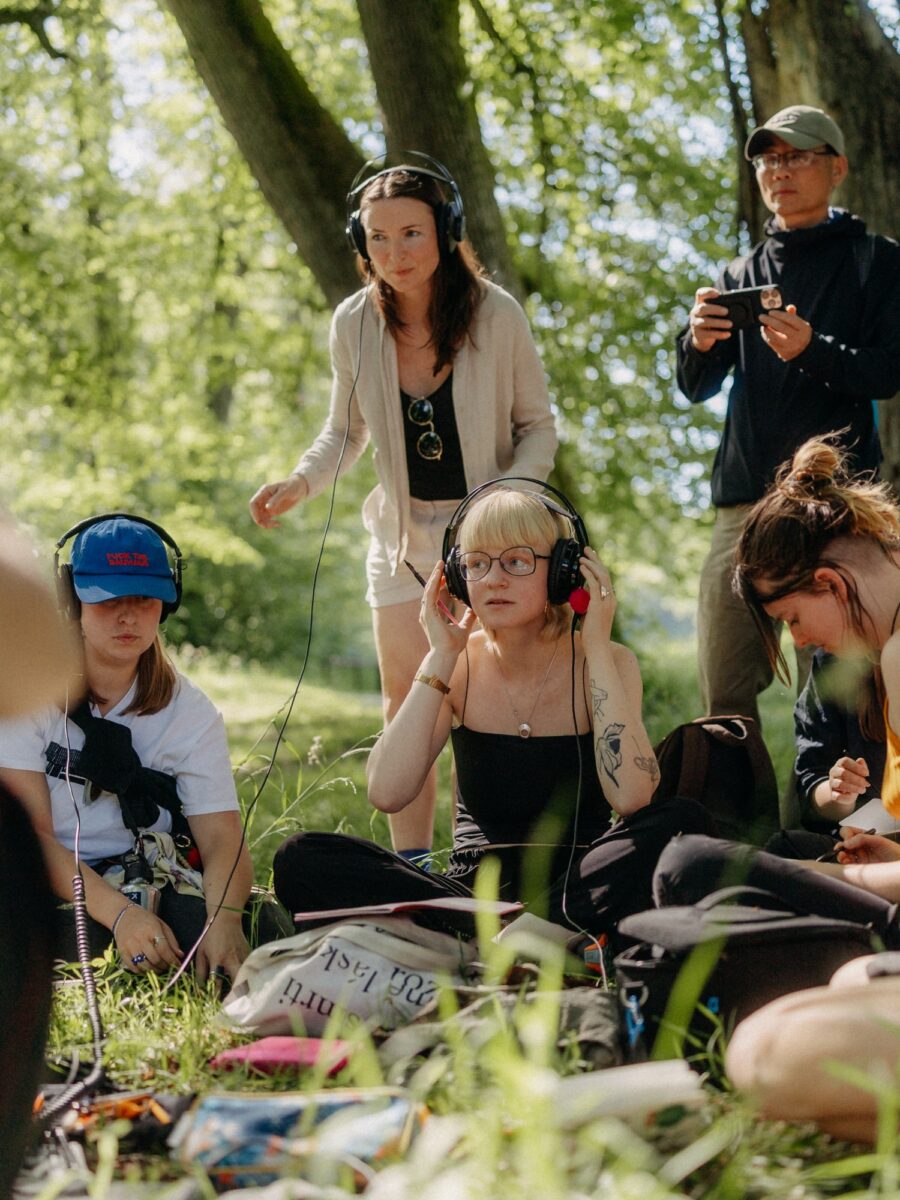

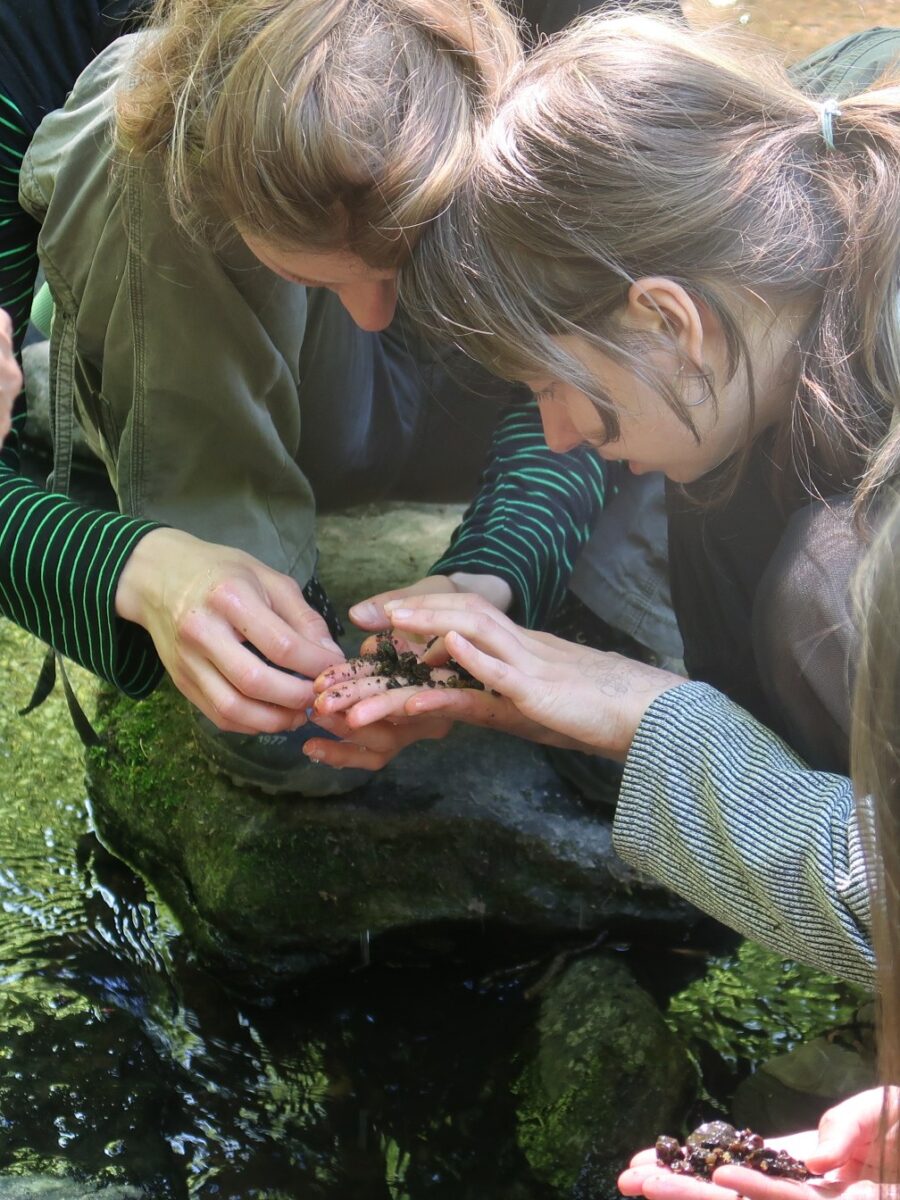
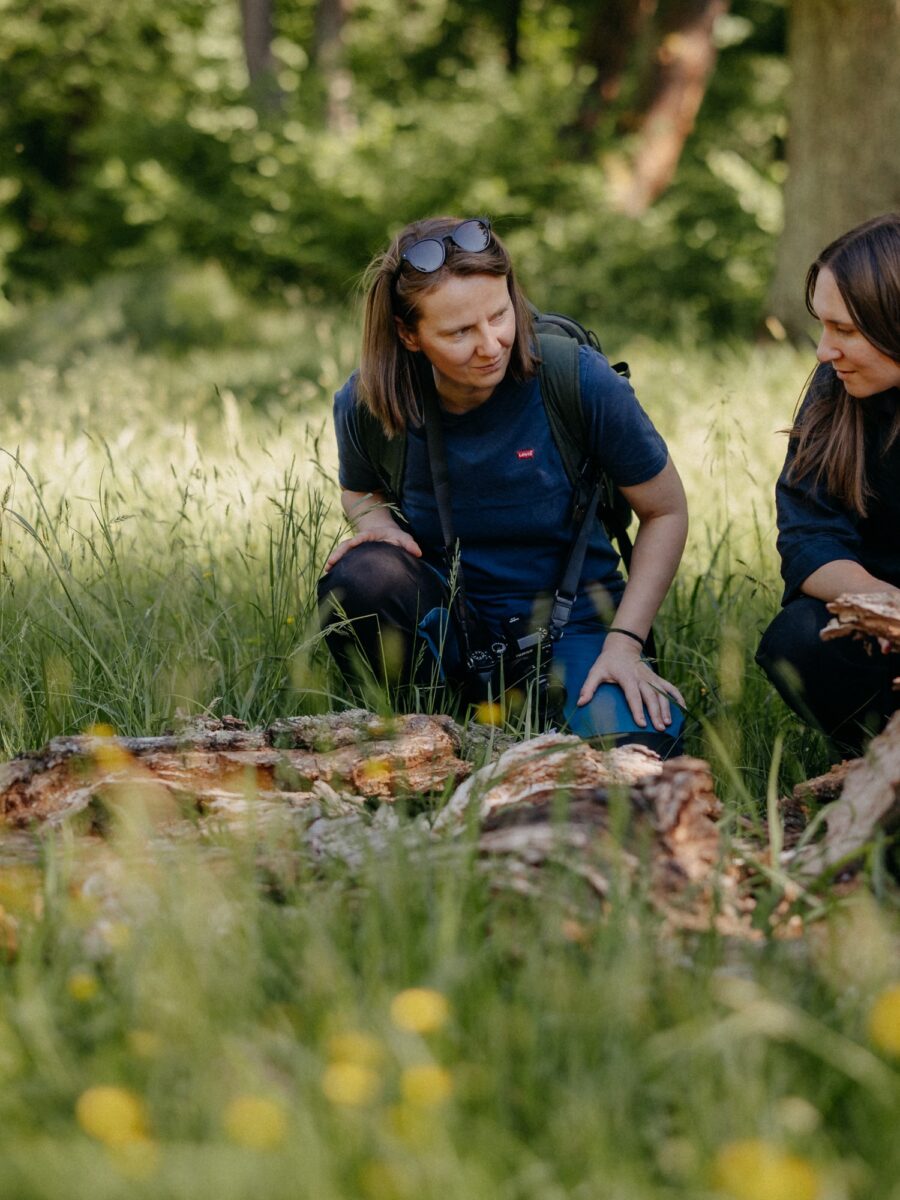
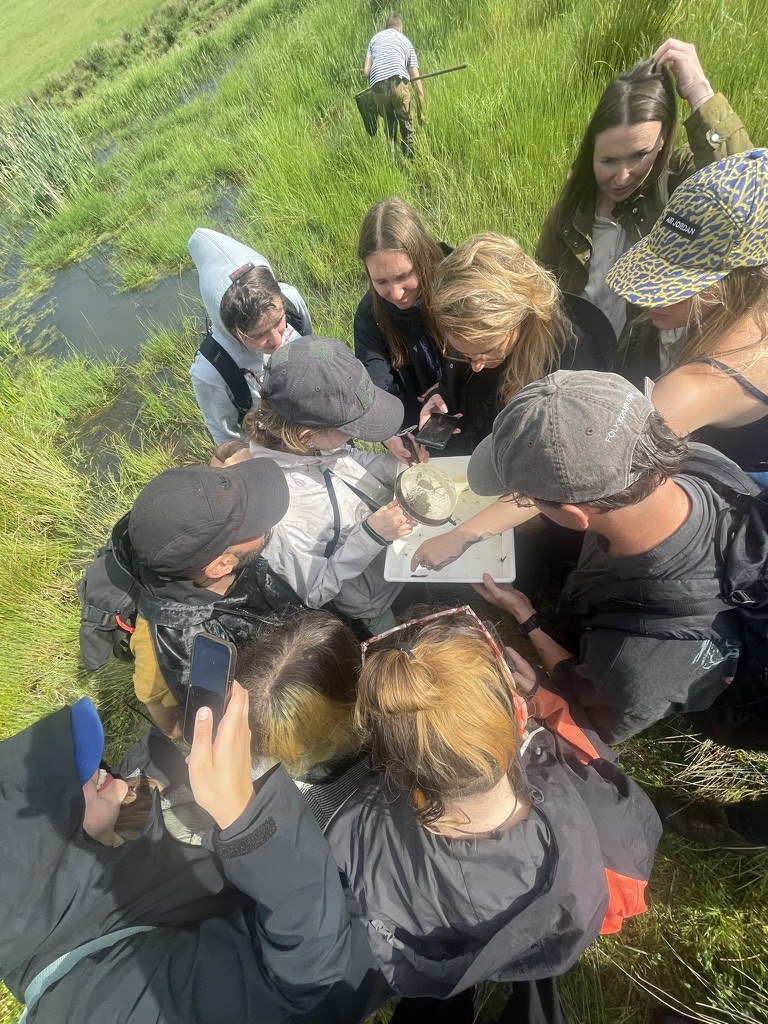
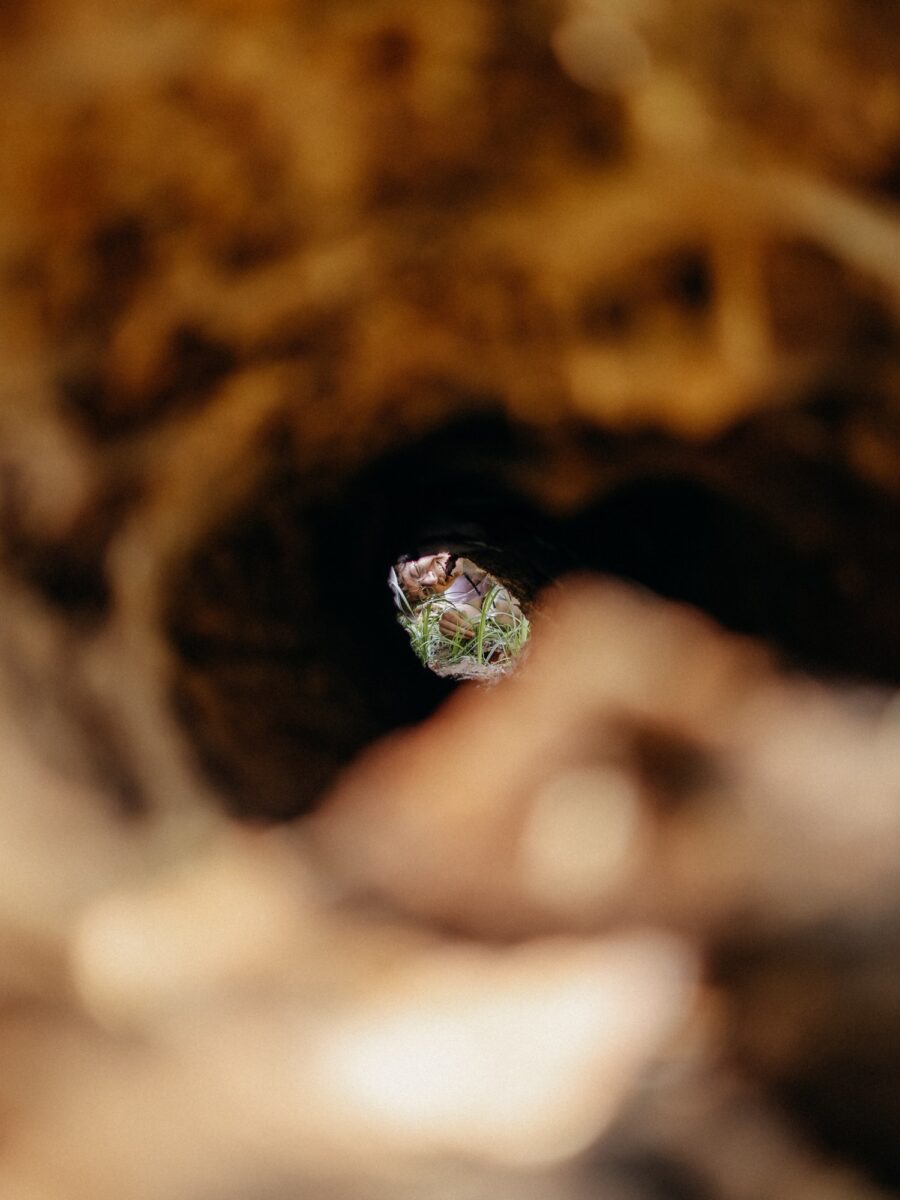

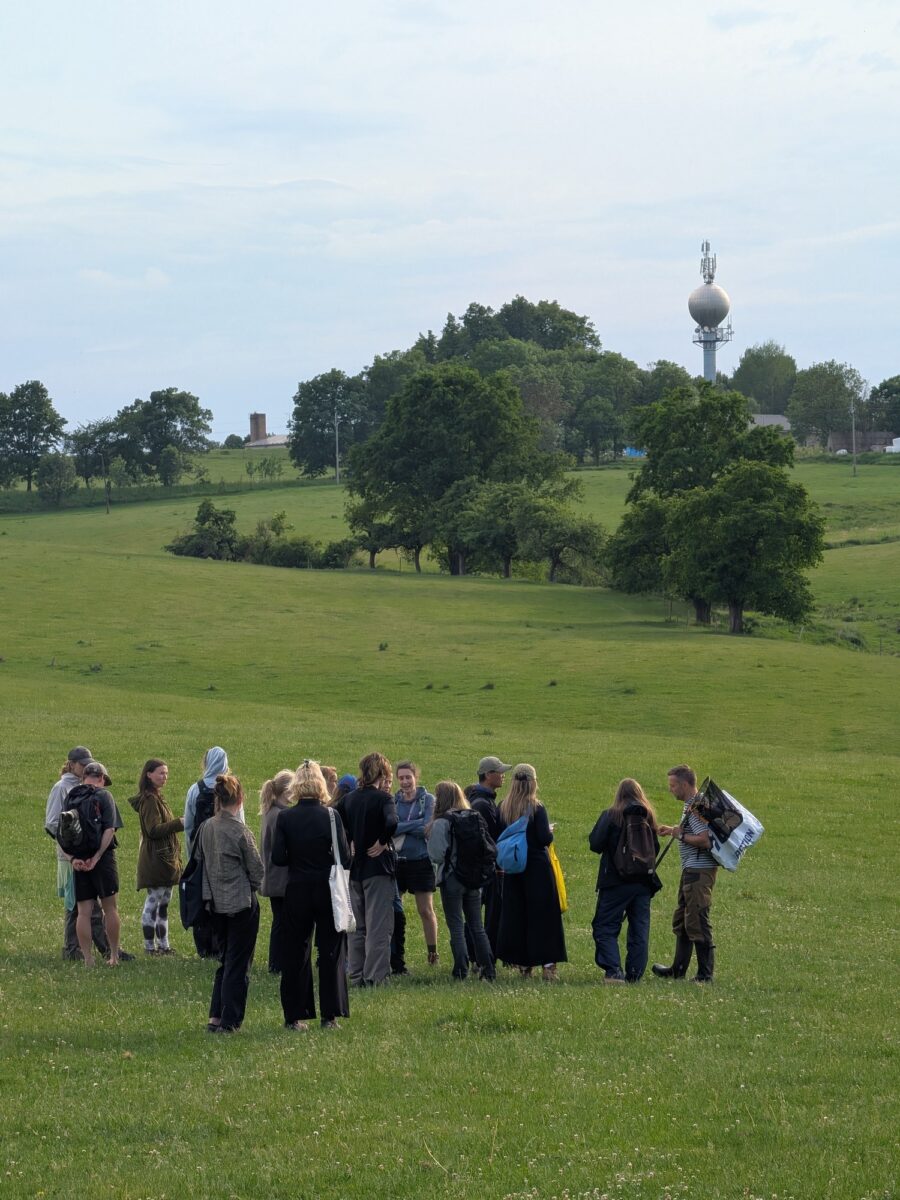




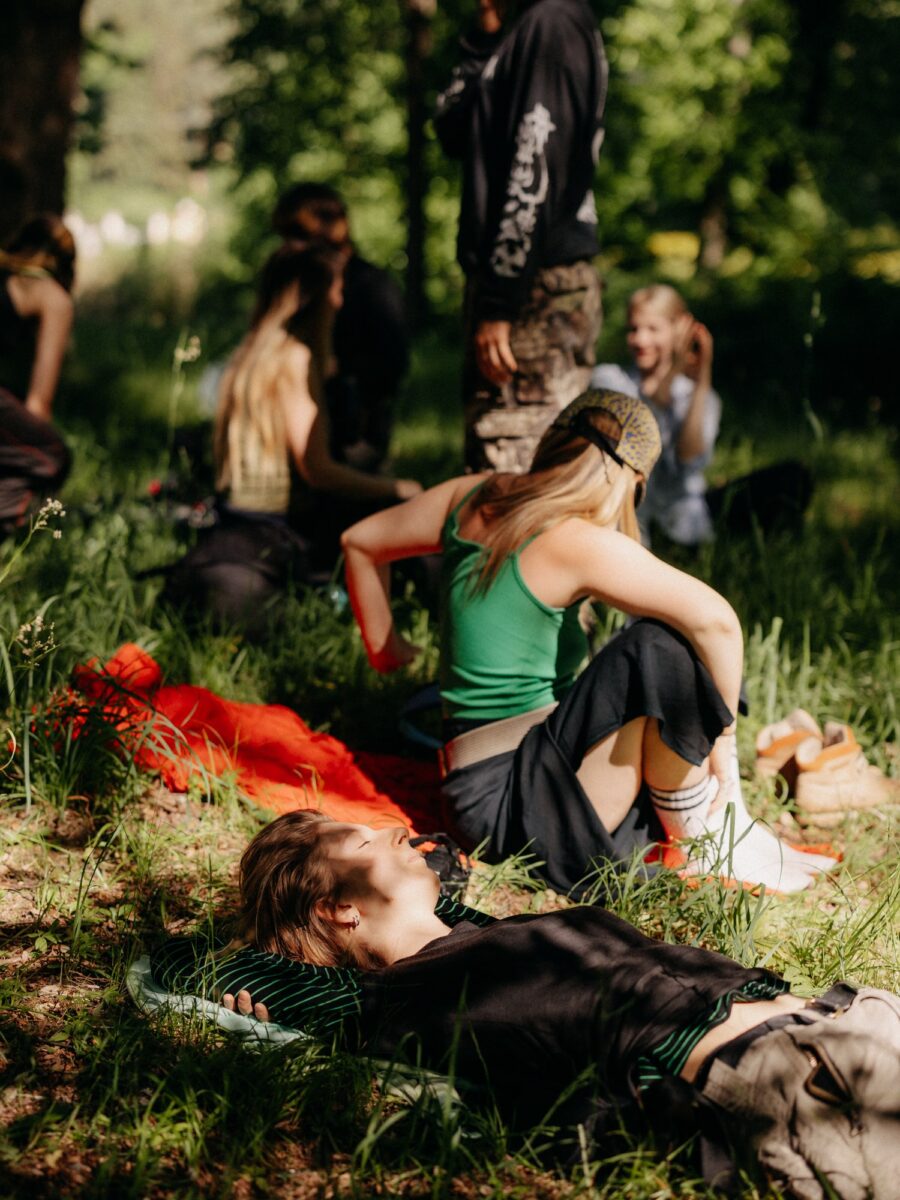


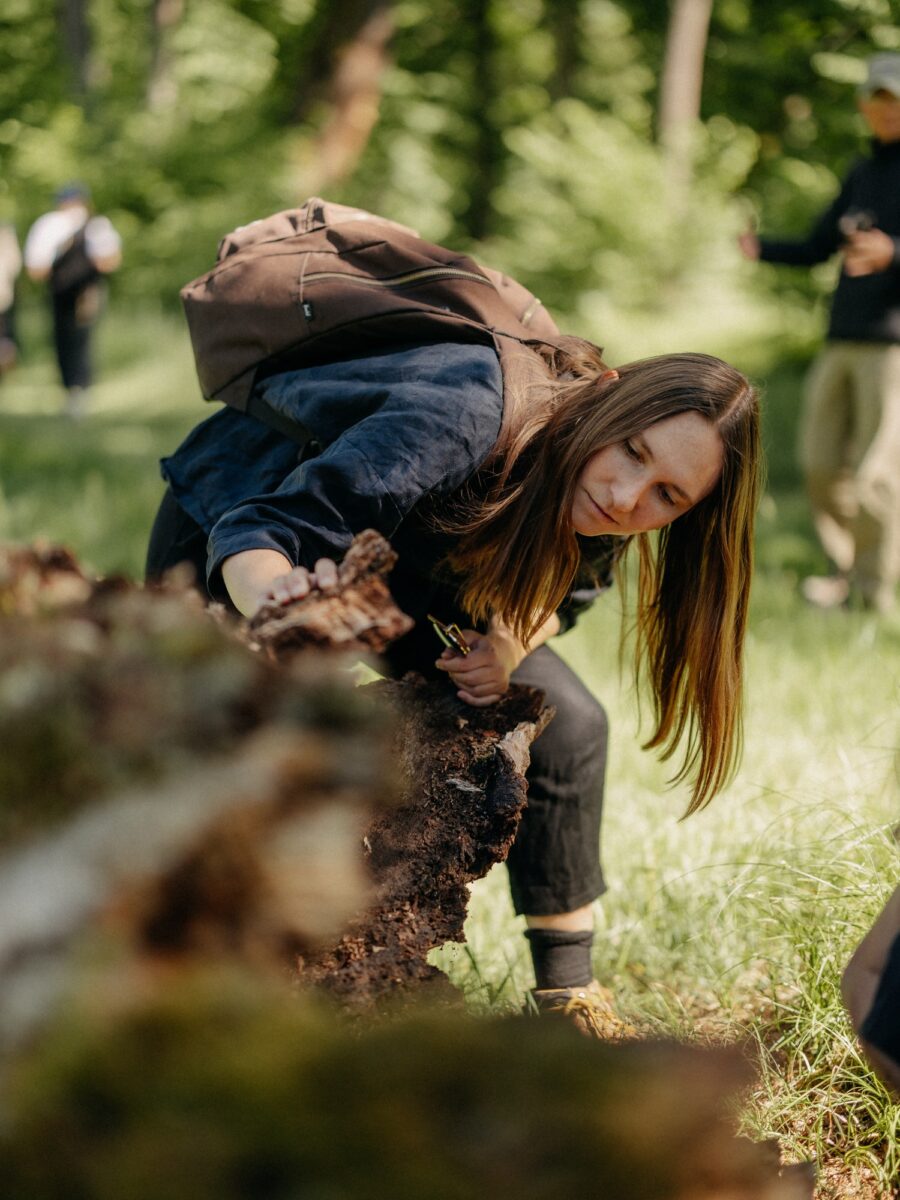
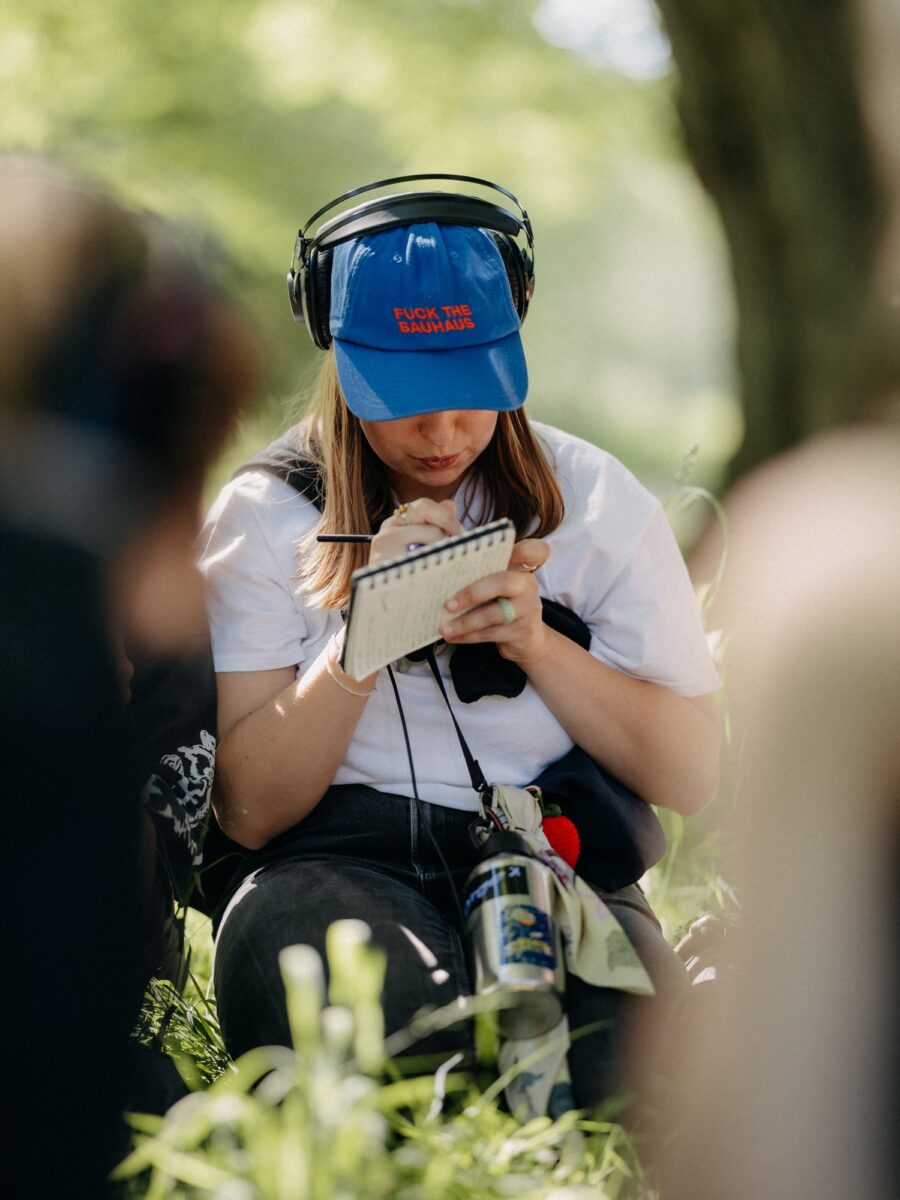


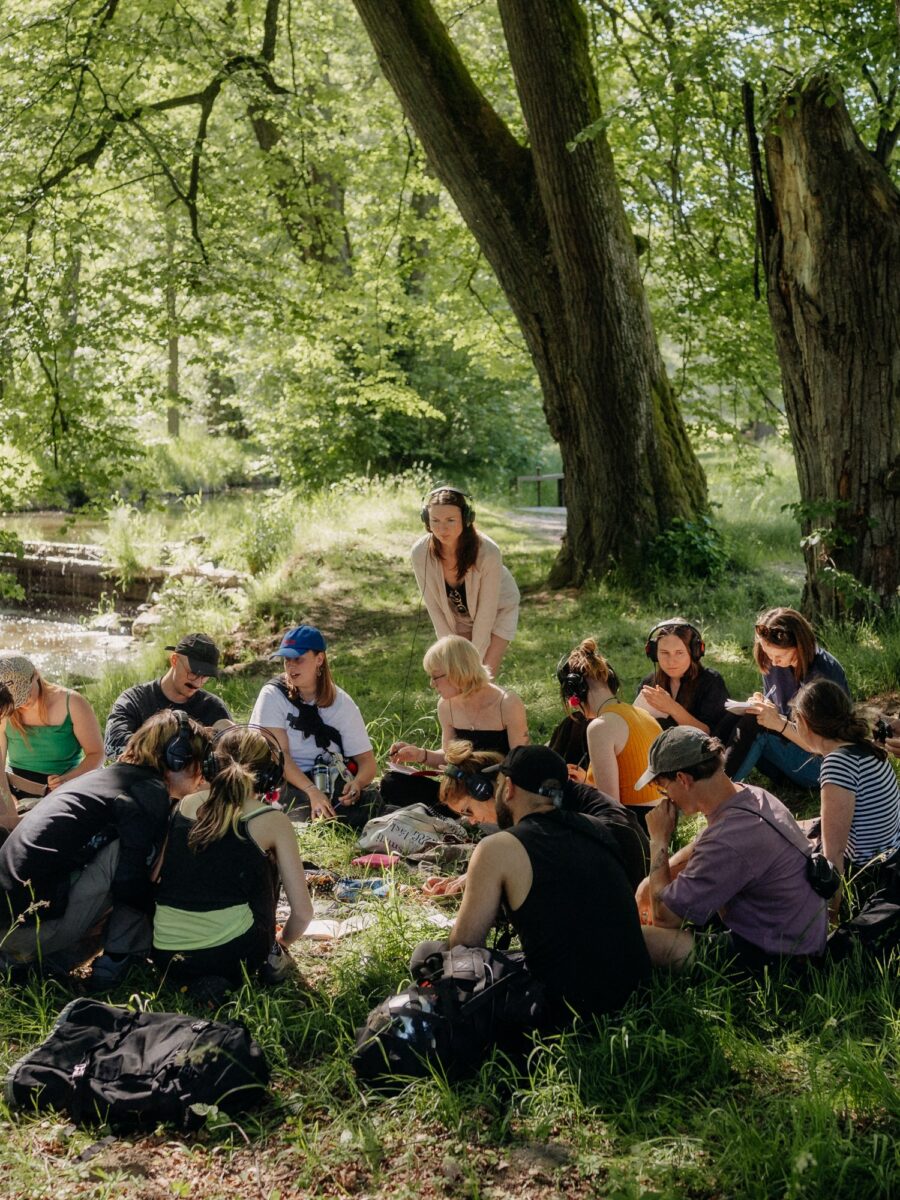

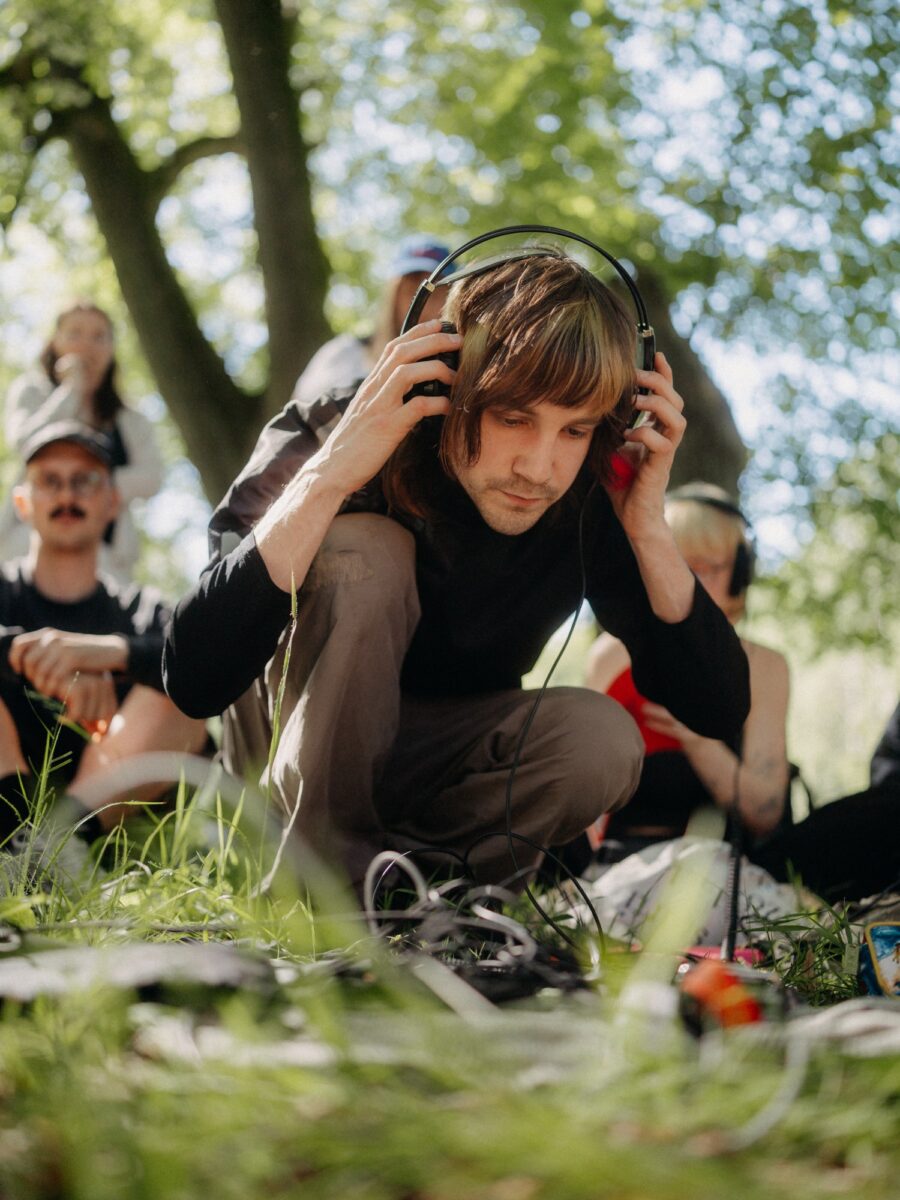
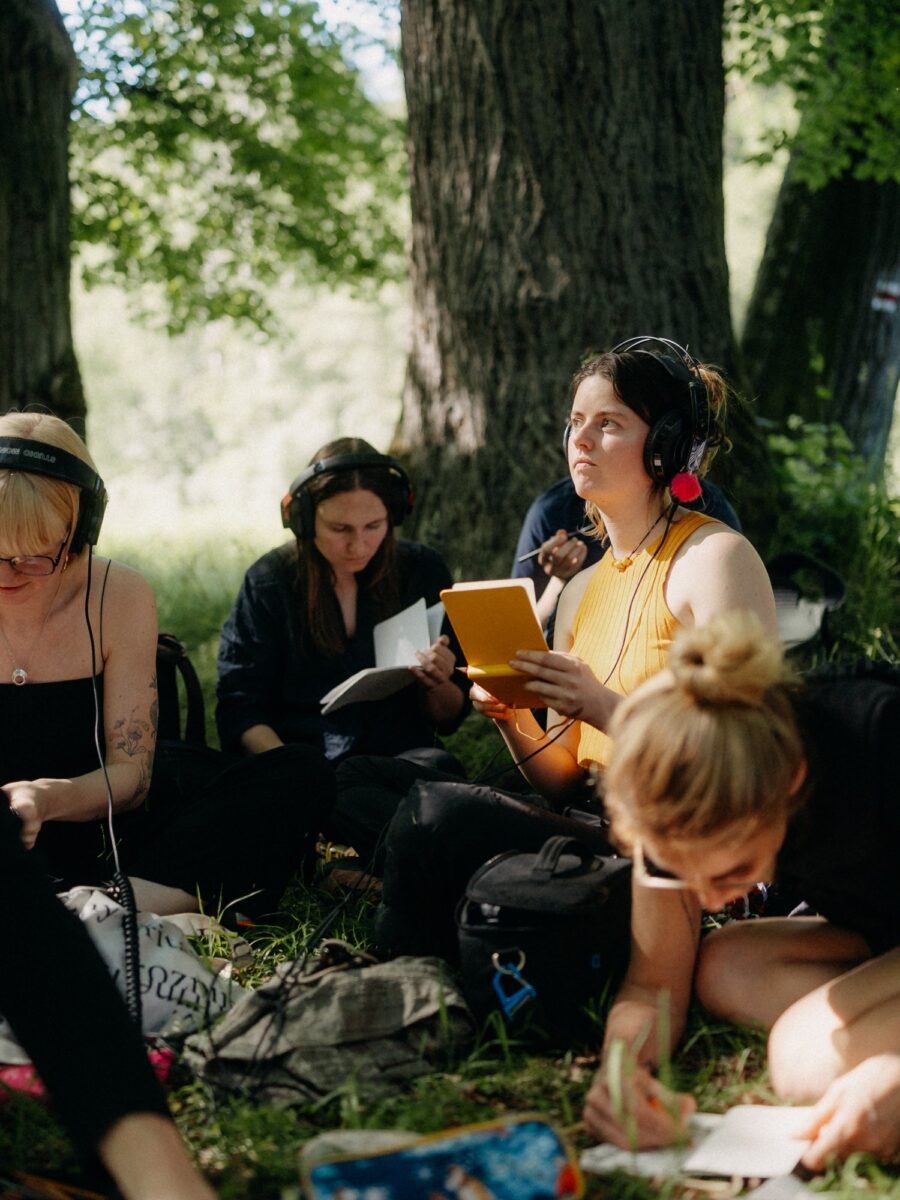


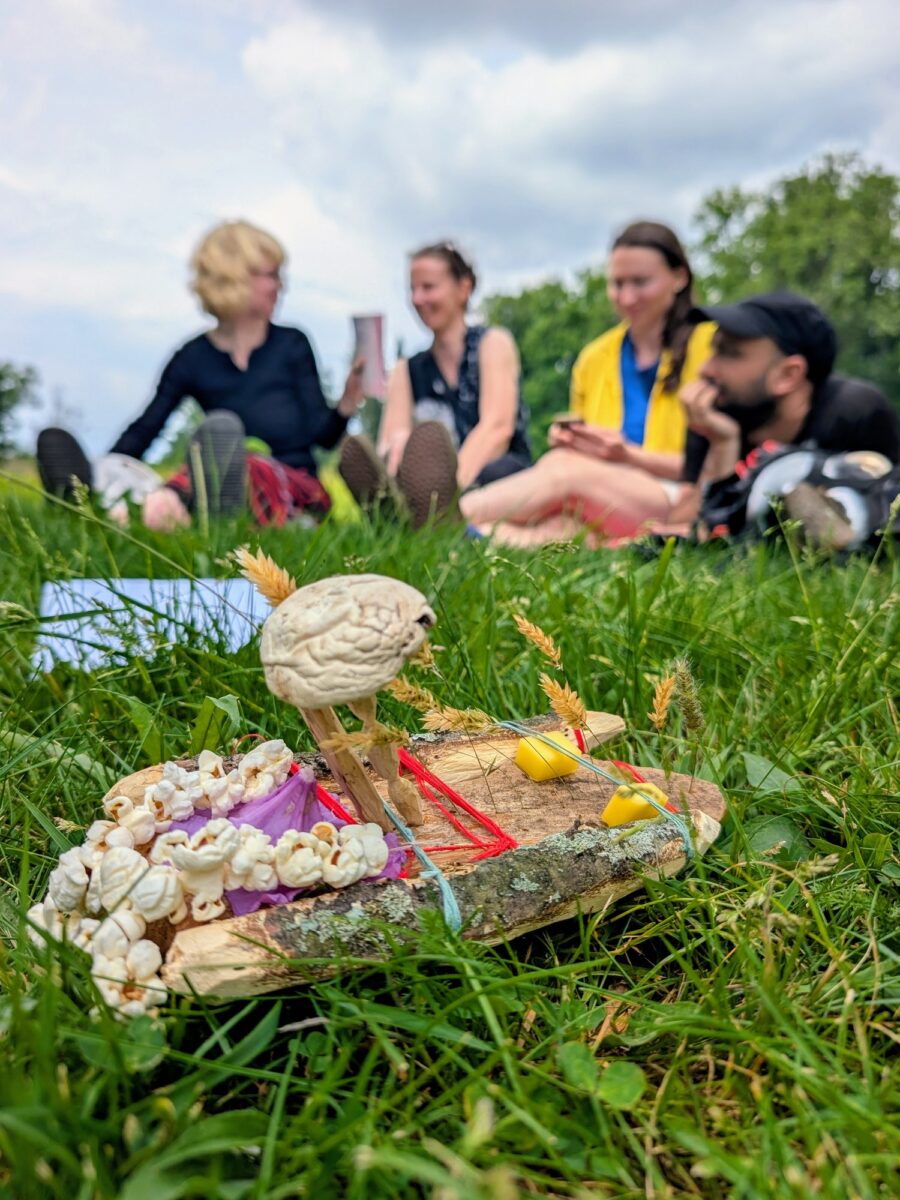
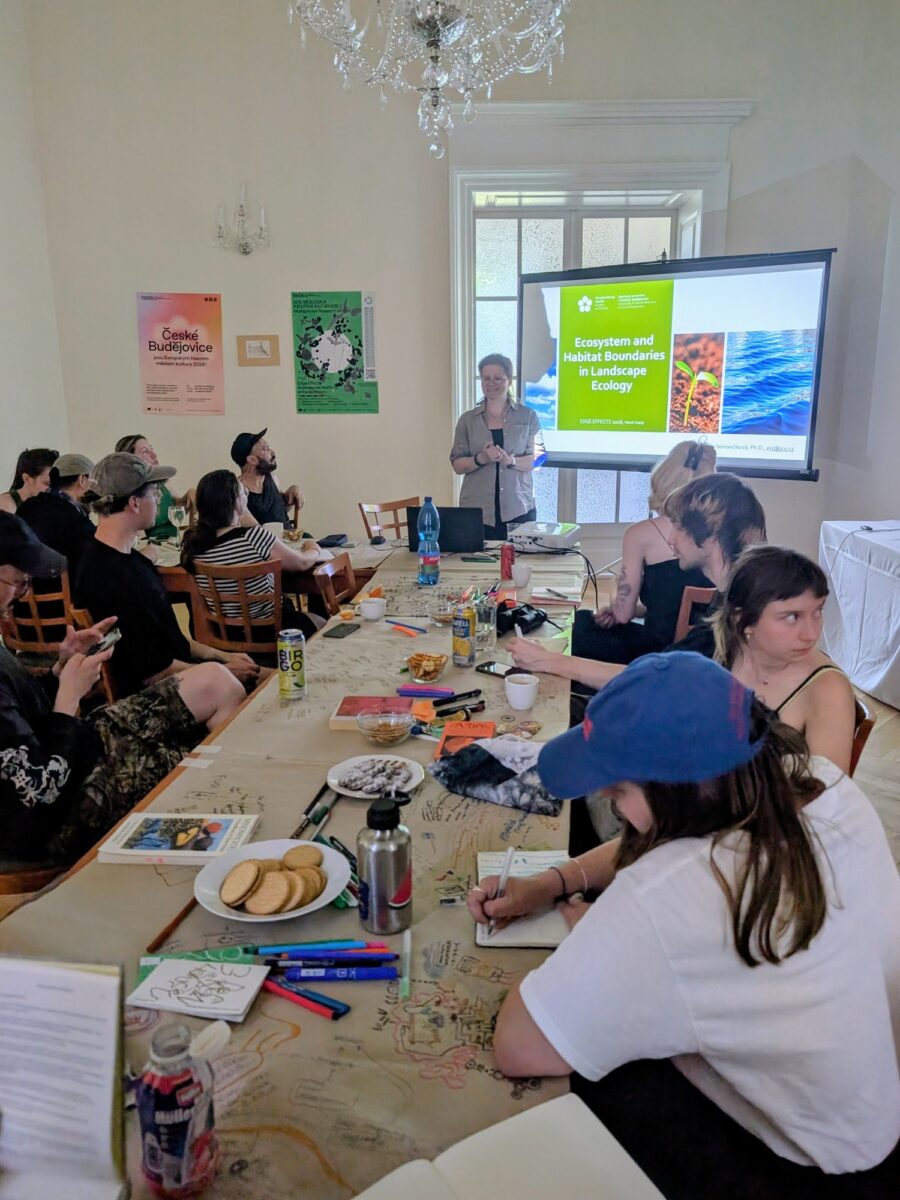
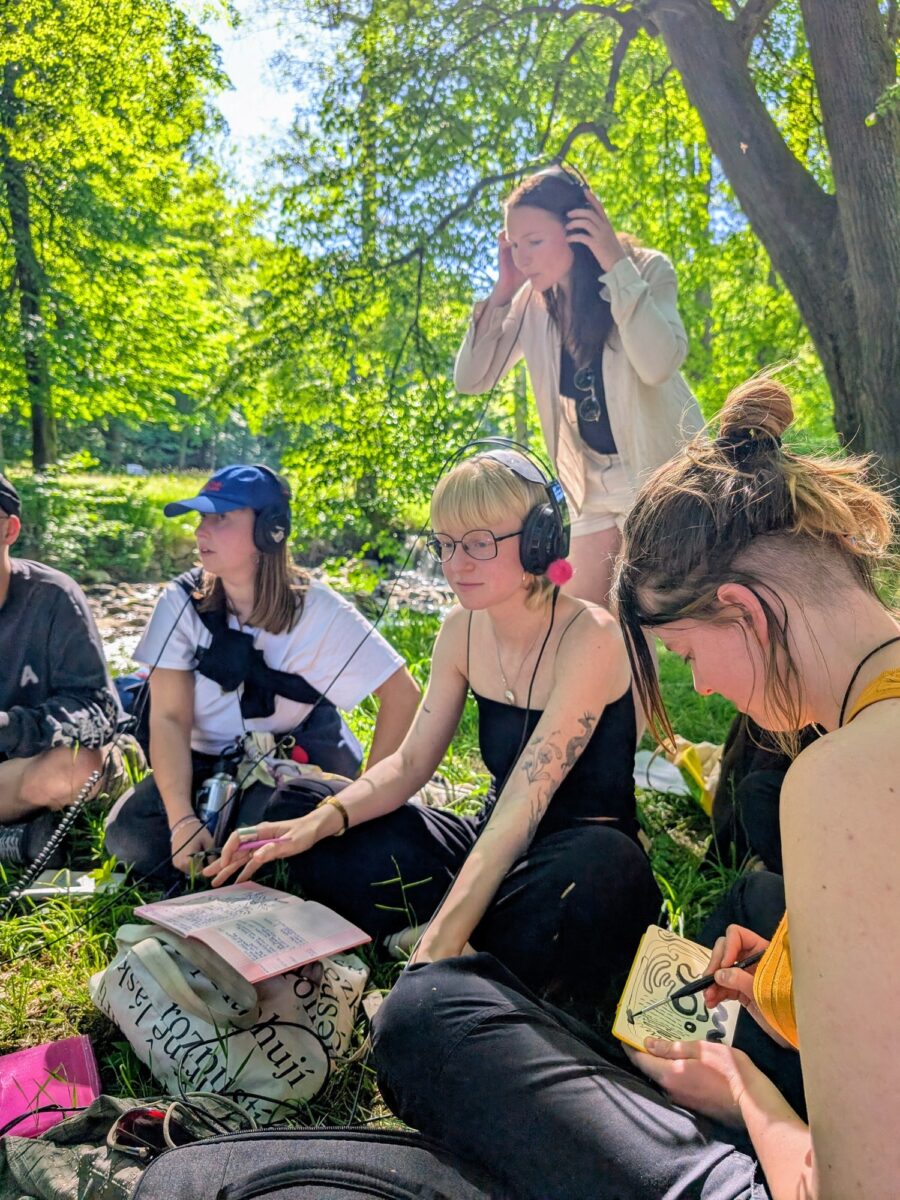




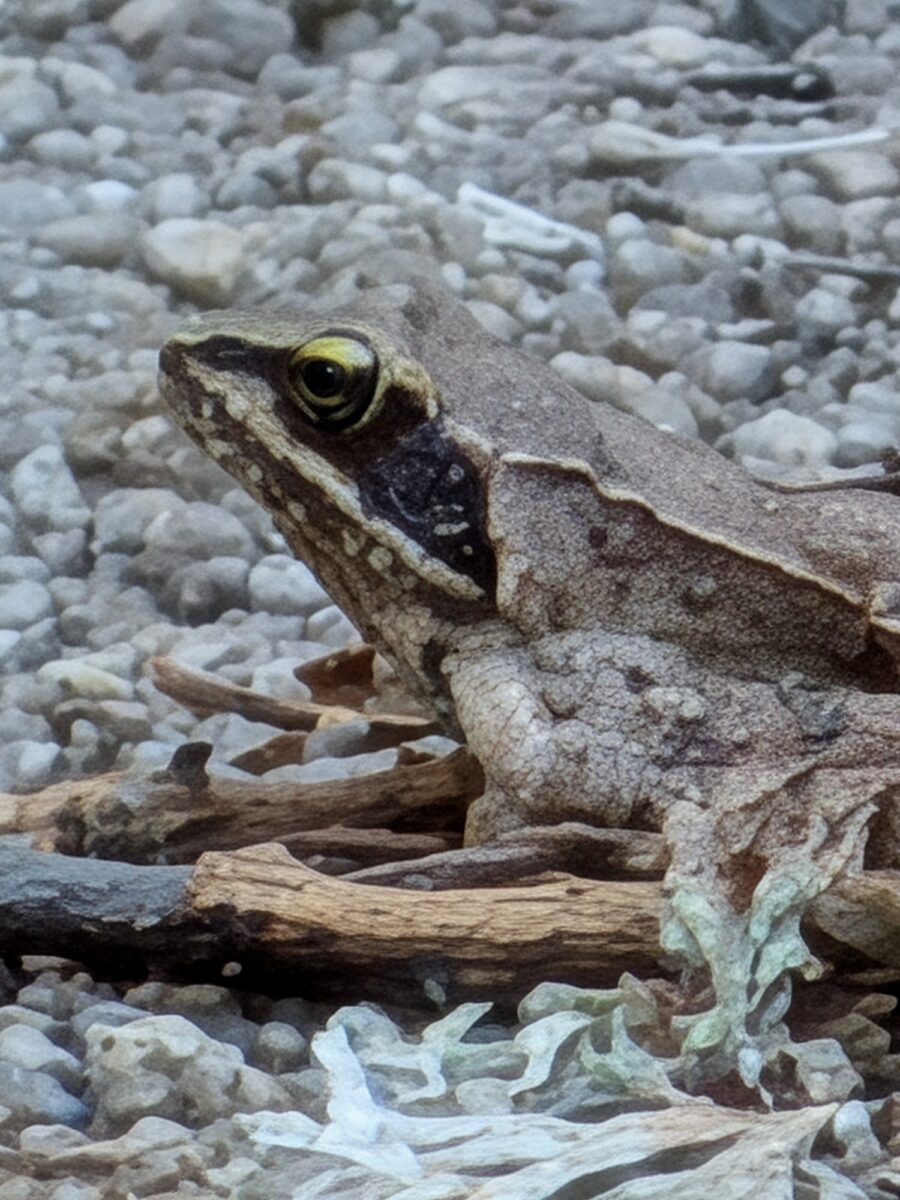
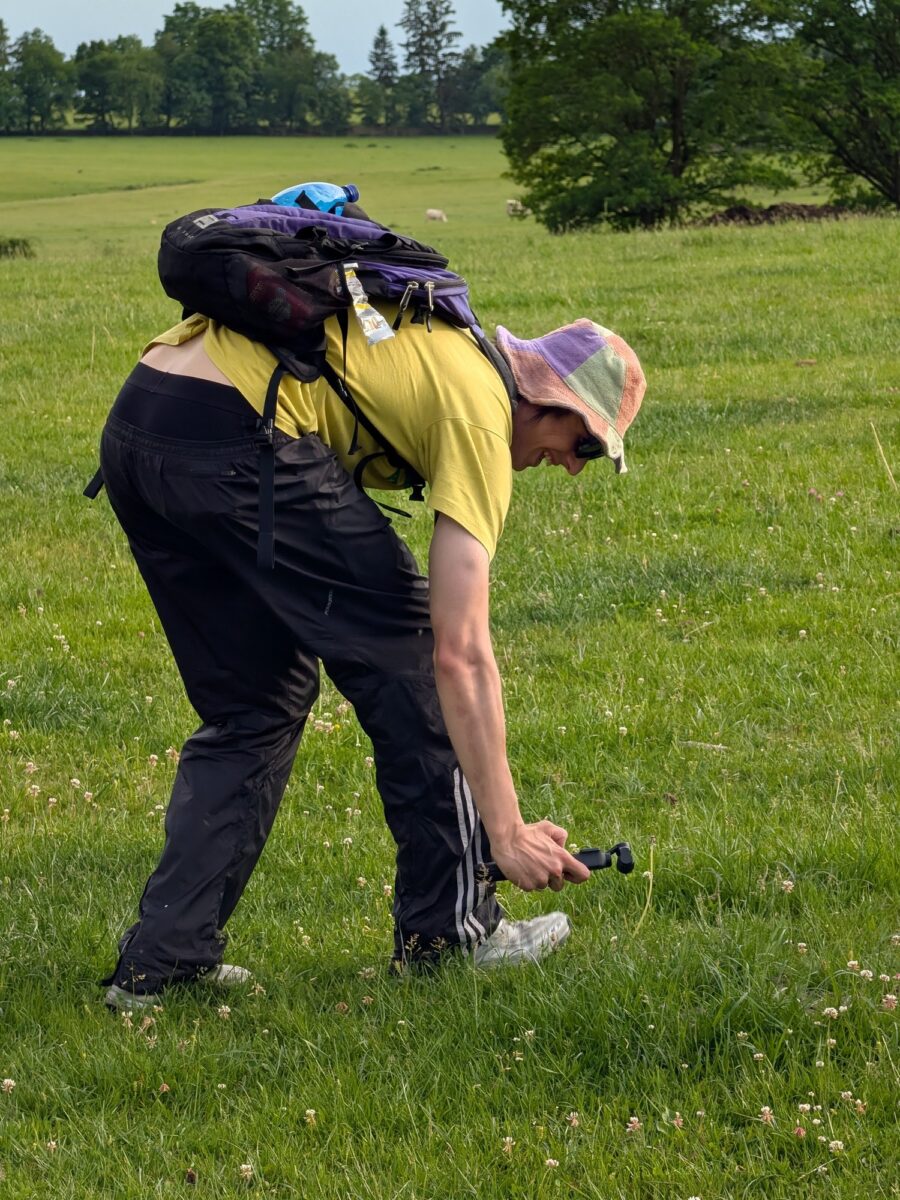

The four-day field workshop Edge Effects: Multispecies Methods at the Boundary was held on 28–31 May 2026 in Nové Hrady, South Bohemia, as the multispecies research module of the Ars Biologica Independent Studies (ABIS) programme, within České Budějovice – European Capital of Culture 2028. The module is led by Markéta Dolejšová and Tamara Spalajković and was co-organised with the Multispecies Ecologies & Practices research group at the Academy of Fine Arts in Prague (AVU).
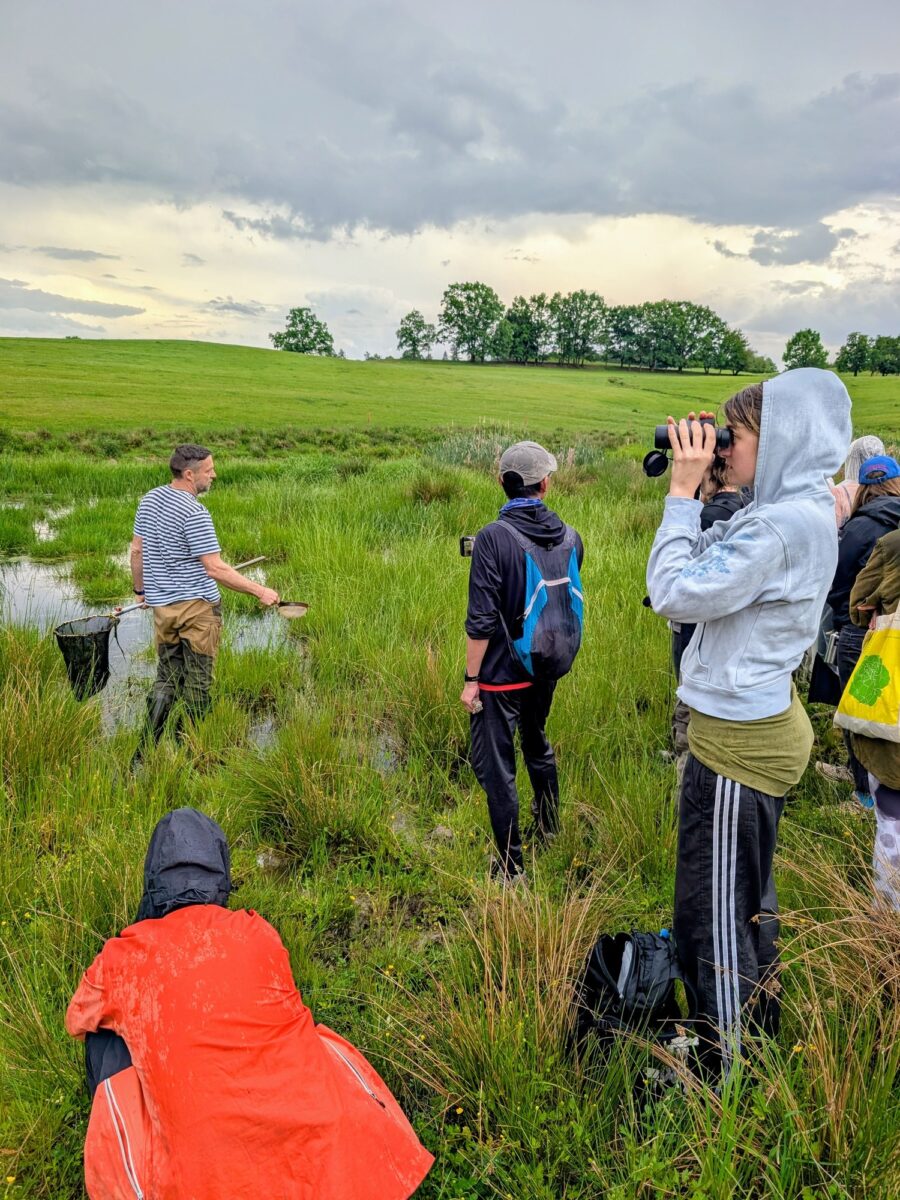
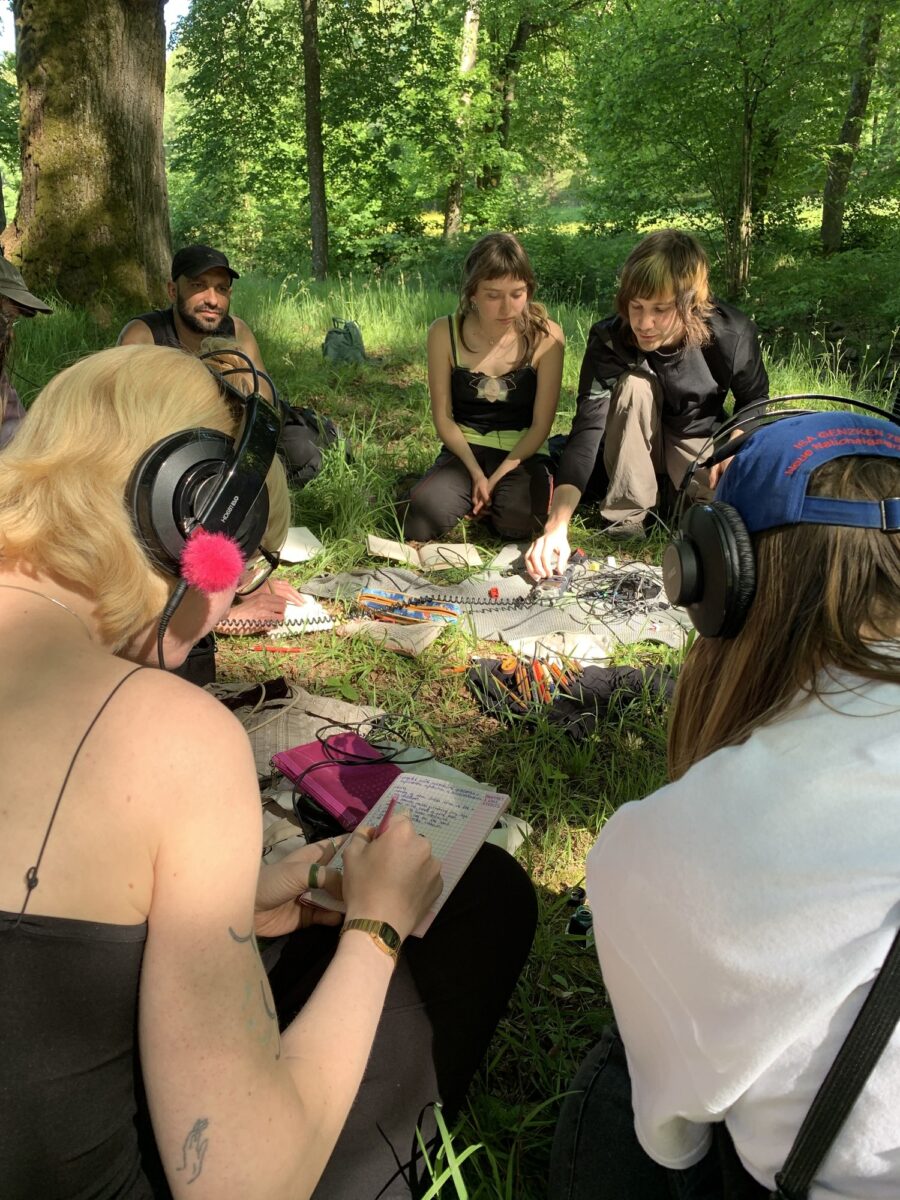
Things intensify at the edge. In landscapes, edges or boundary zones are sites of heightened biodiversity, but also of competition and vulnerability. In research, edges matter too: they are where methods meet, disciplinary habits get tested and new forms of attention can emerge. As a group of 17 participants from the arts and the sciences, we spent four days at the edges of wetlands, ponds, streams, forests and meadows in the Novohradské Mountains, asking how these zones are shaped by human and other-than-human activity, and what our different methods can (and cannot) notice there. Rather than smoothing over our disciplinary differences, we treated them as productive conditions for inquiry.
Mapping our methods
Everyone brought along a research method they work with. On the first day, we introduced our „methods-in-practice“ to each other, mapped them together and clustered them into small working groups. The groups were intentionally porous: everyone could drift between them, share their method several times in different contexts and receive diverse feedback.
Methods in practice
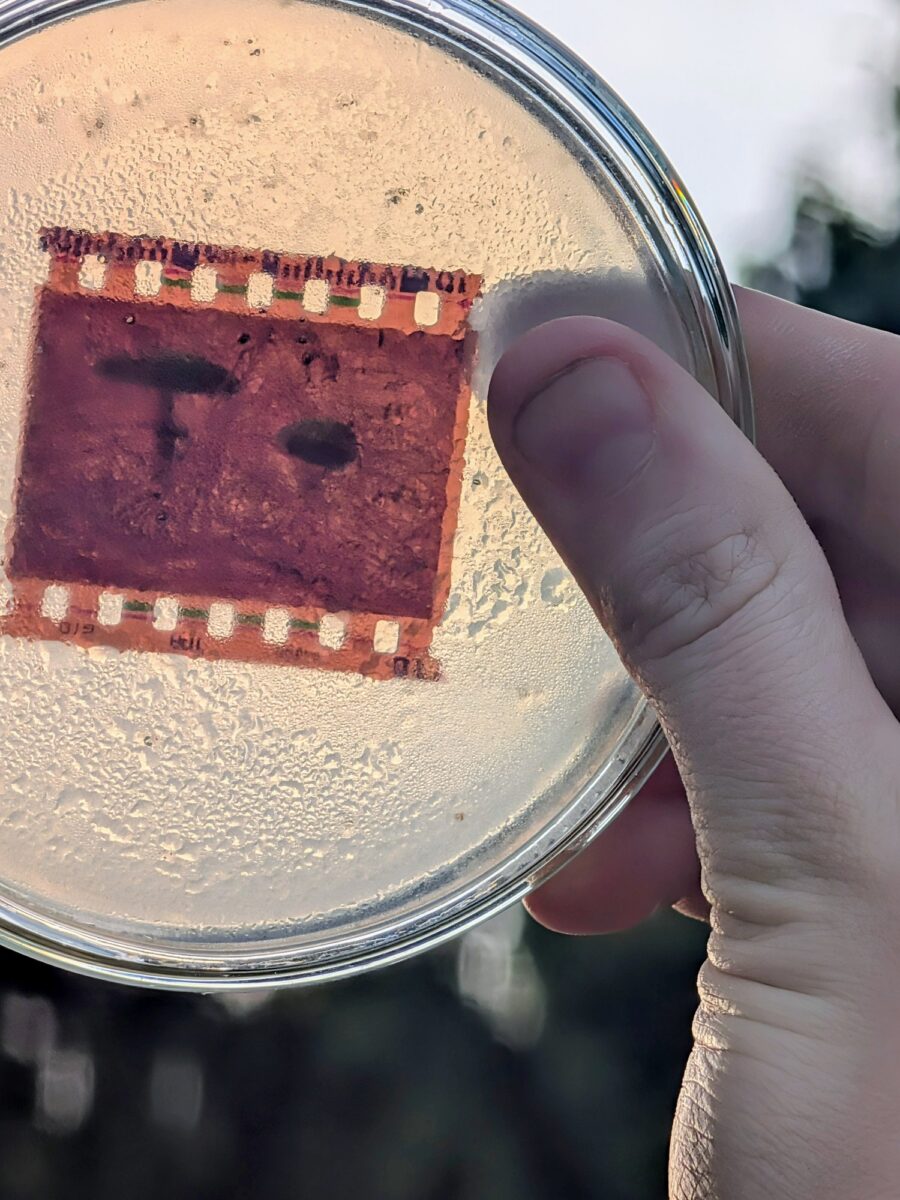
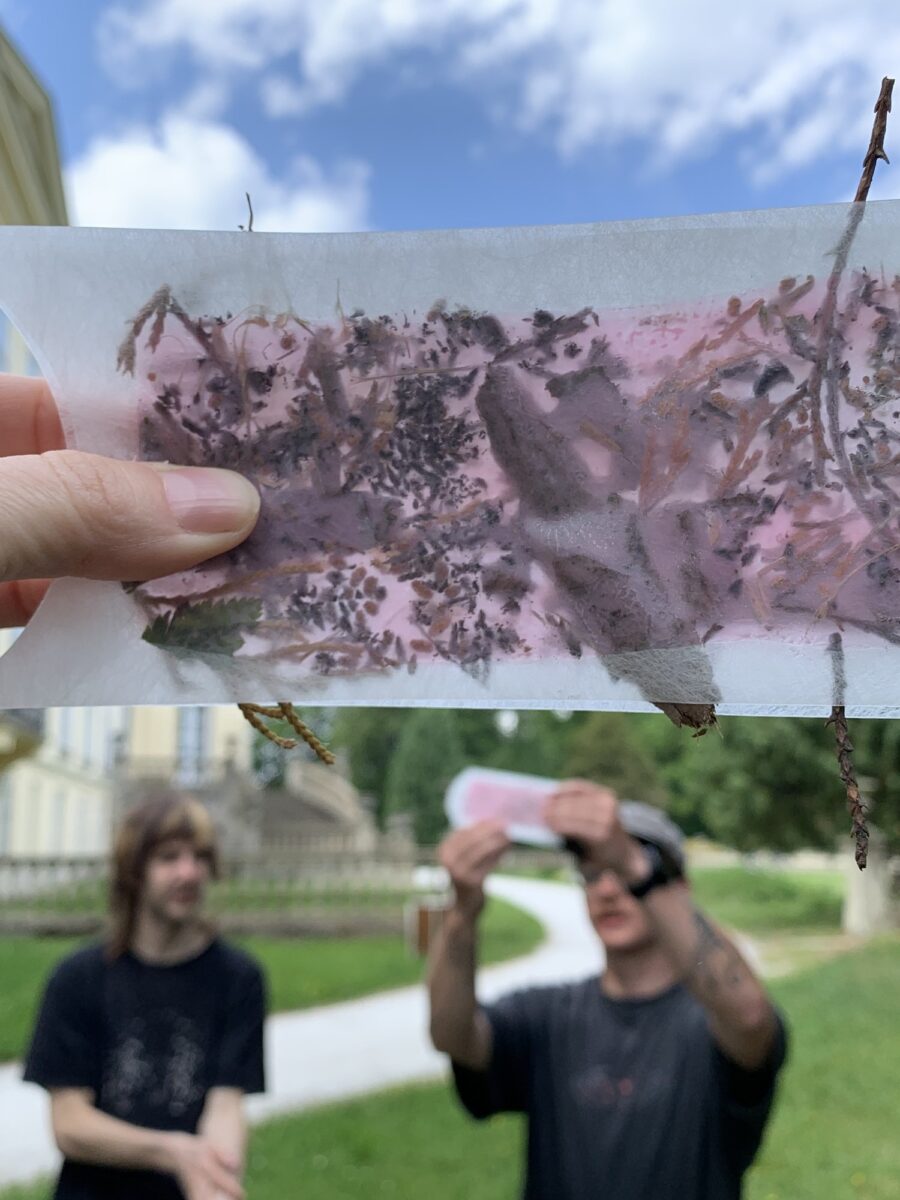
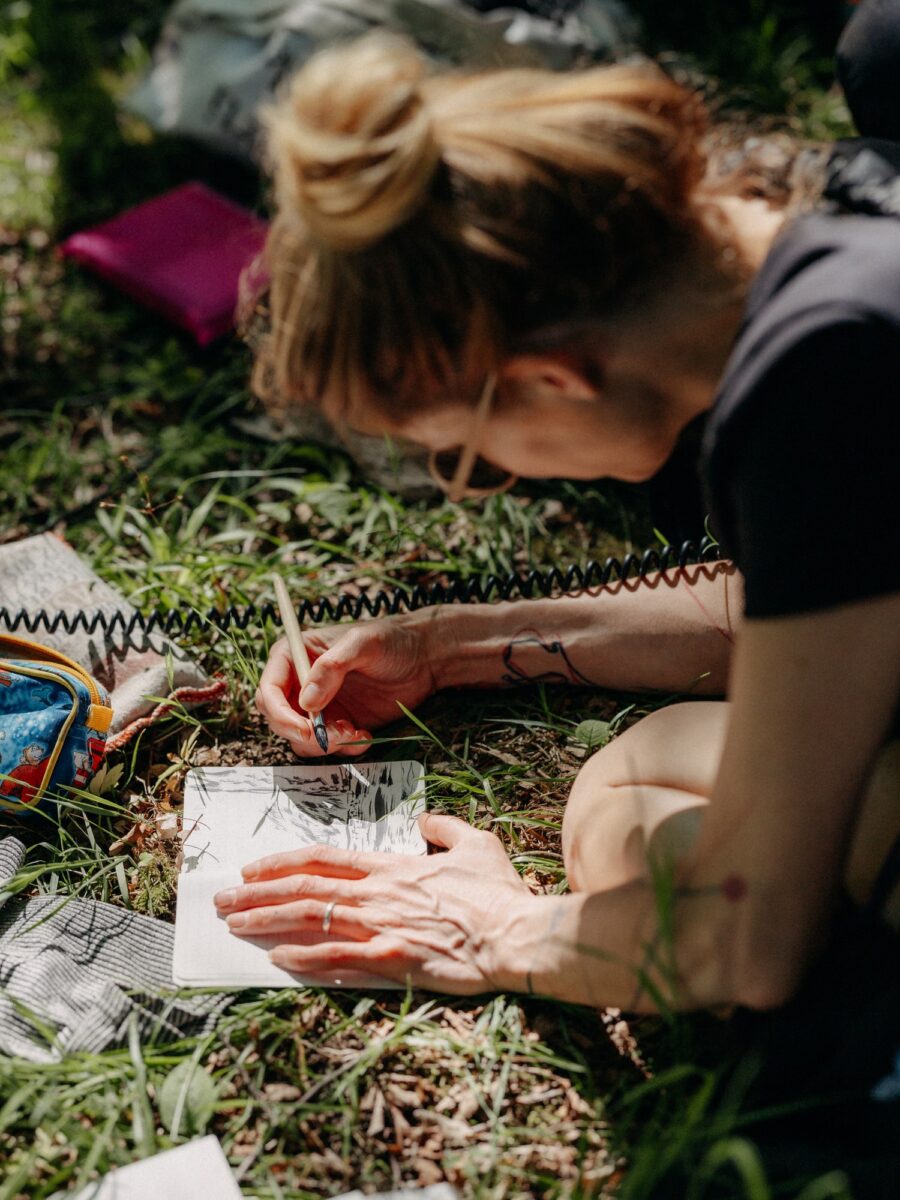
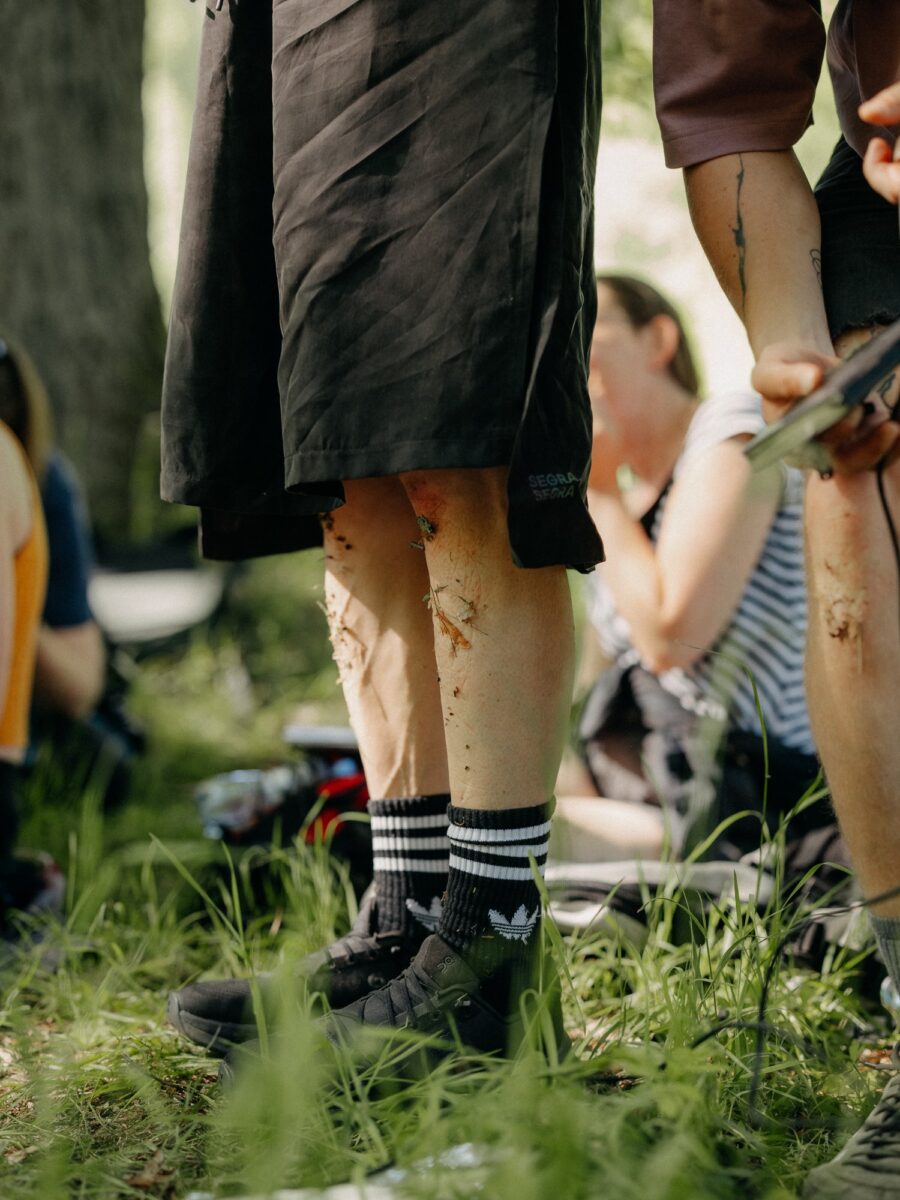
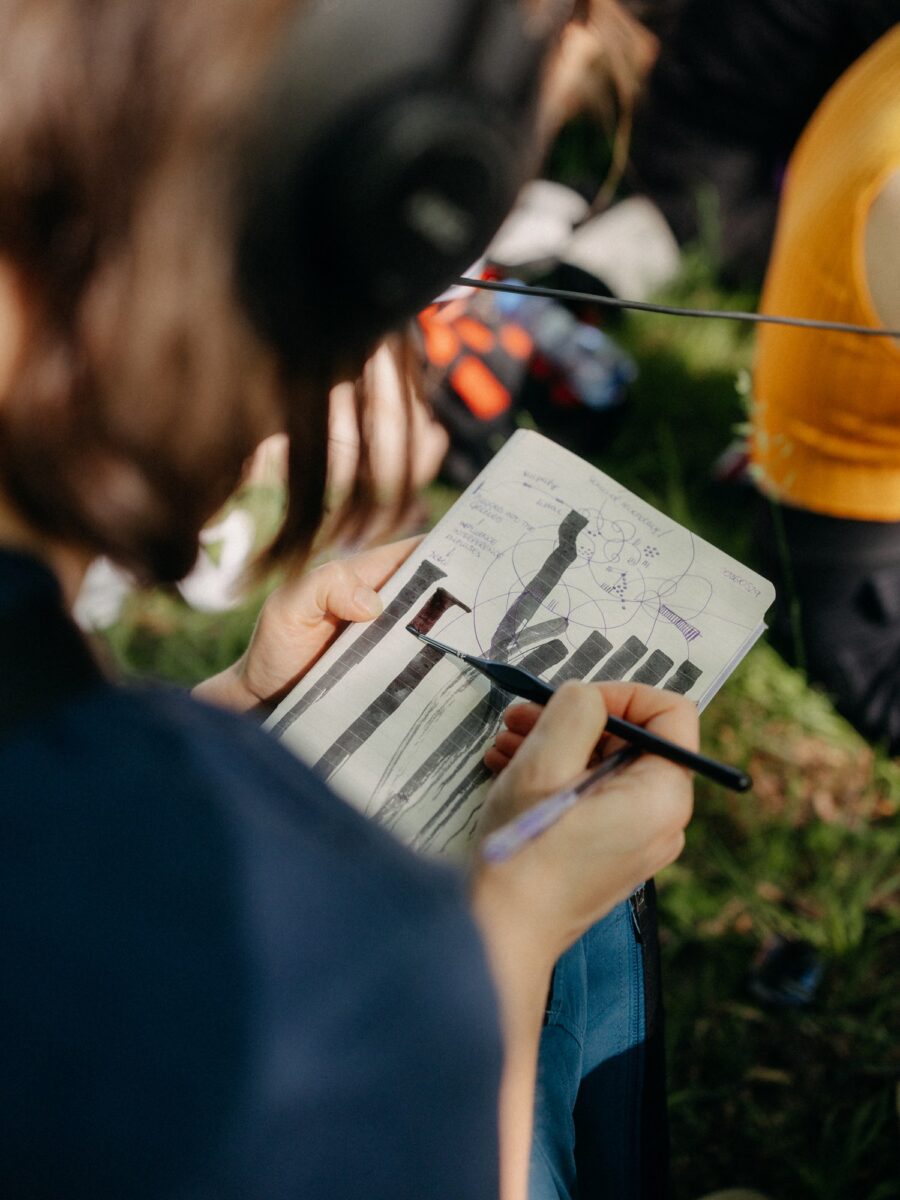
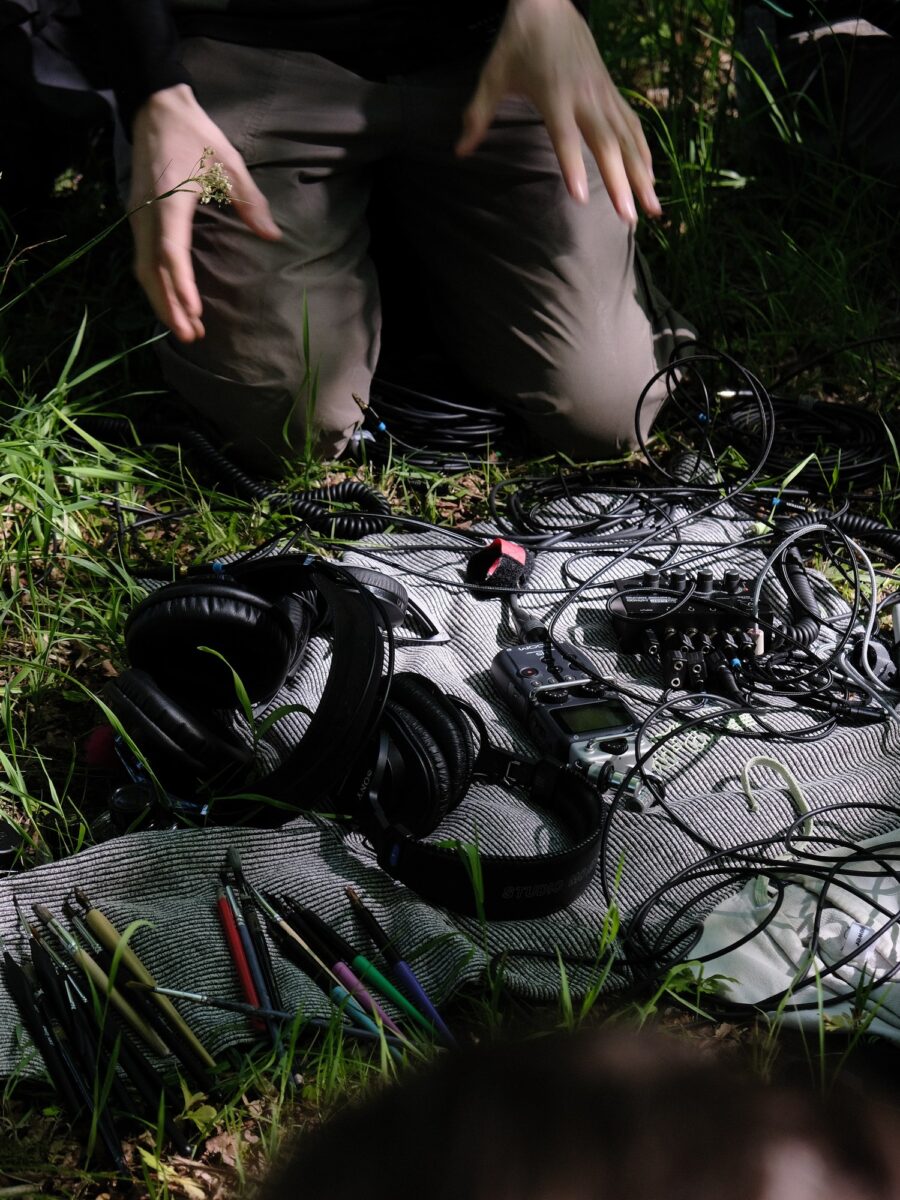
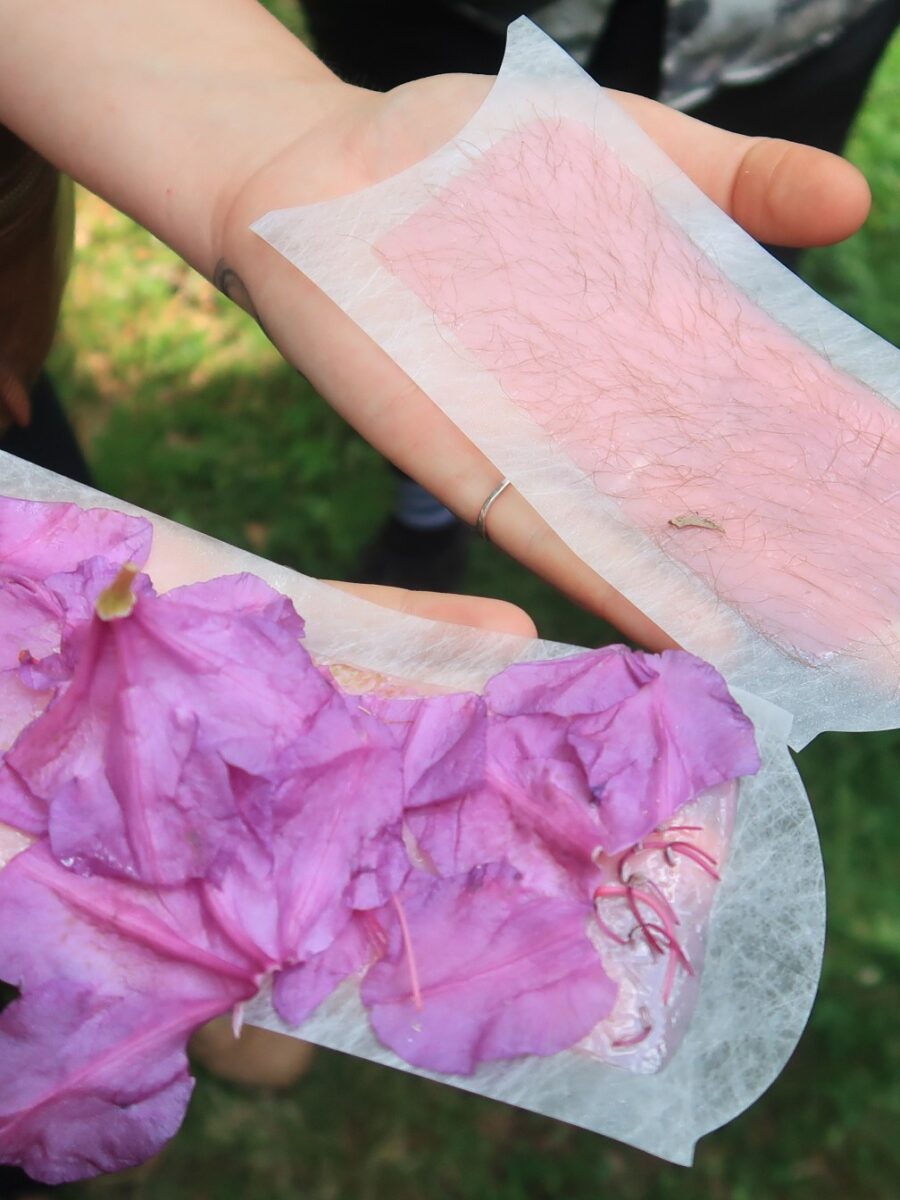
Over the next two days, we took our methods out into the field and practised them together: whoever proposed a method invited the others to try it. We listened to soil through geophones and turned what we heard into drawings, co-developed photographs with microbes, waxed some weeds, (did not) find nocturnal slime moulds, interviewed ourselves about human manure, and pointed each other to traces of other-than-human life with words and gestures. The methods we put into practice:
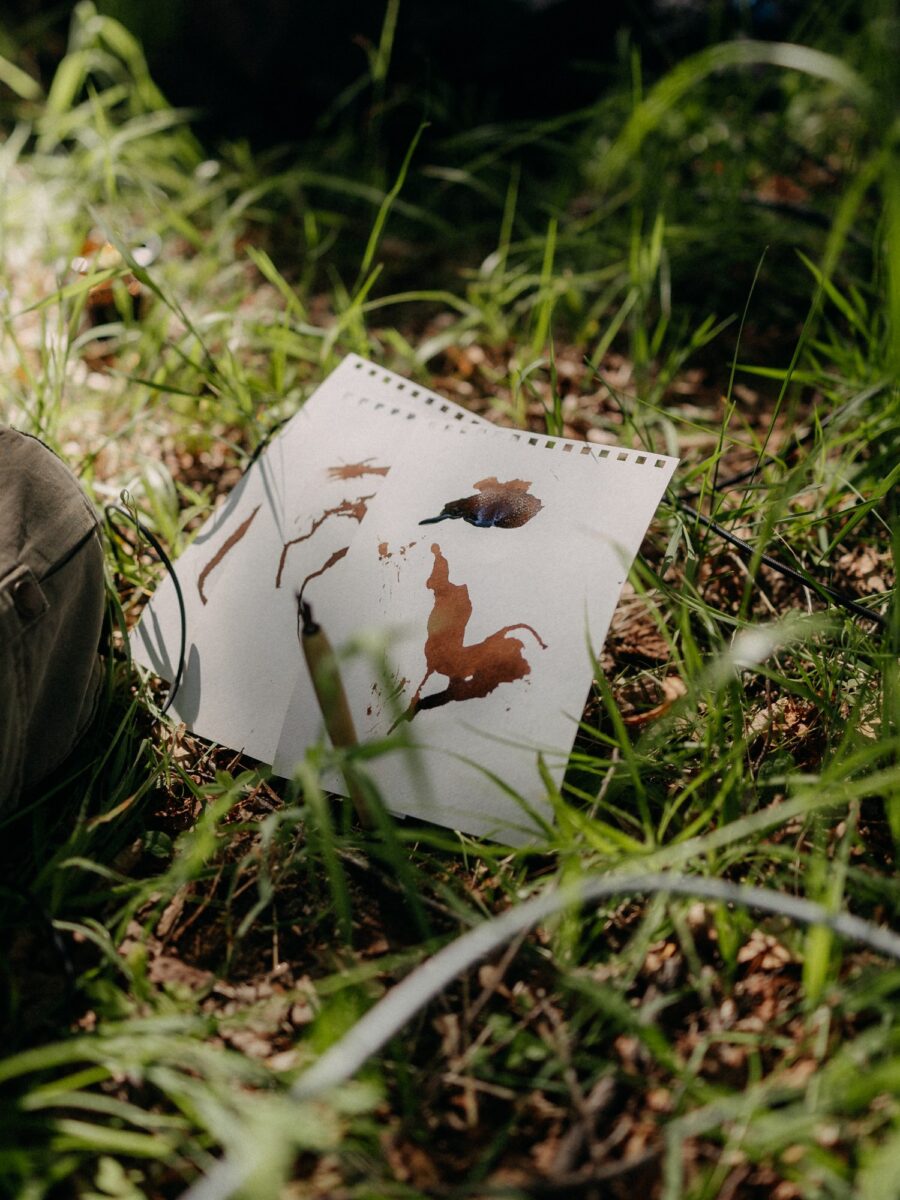
- Imagining Life Underground, Kateřina Šípová & Ondřej Konrád: listening to the soil through geophones and drawing what we hear
- Edges of Photography, Magdalena Wutkowska: inviting ecological communities to interfere with, change and reuse photographic images
- Weed Waxing, Jojanneke van Duijn: between shaved lawns, trimmed hedges and the hair growing on our bodies
- Counter-mapping Co-destruction, Alžběta Petrův: tracing decay and toxicity as more-than-human world-making
- Poems about the Visible and Invisible, Sophia Klink: letting the sound of words build bridges to other species
- The Golden Manure Revolution, Catherine Radosa: questions about water, nutrients and what we flush away
- Attending to More-than-Human Traces in the Landscape, Susanne Kass: drawing attention to traces with words, gestures, gaze and smell
- The Shift Protocol: A Relational Attention Walk, Chen Wang: slowing down habits of attention before identifying anything
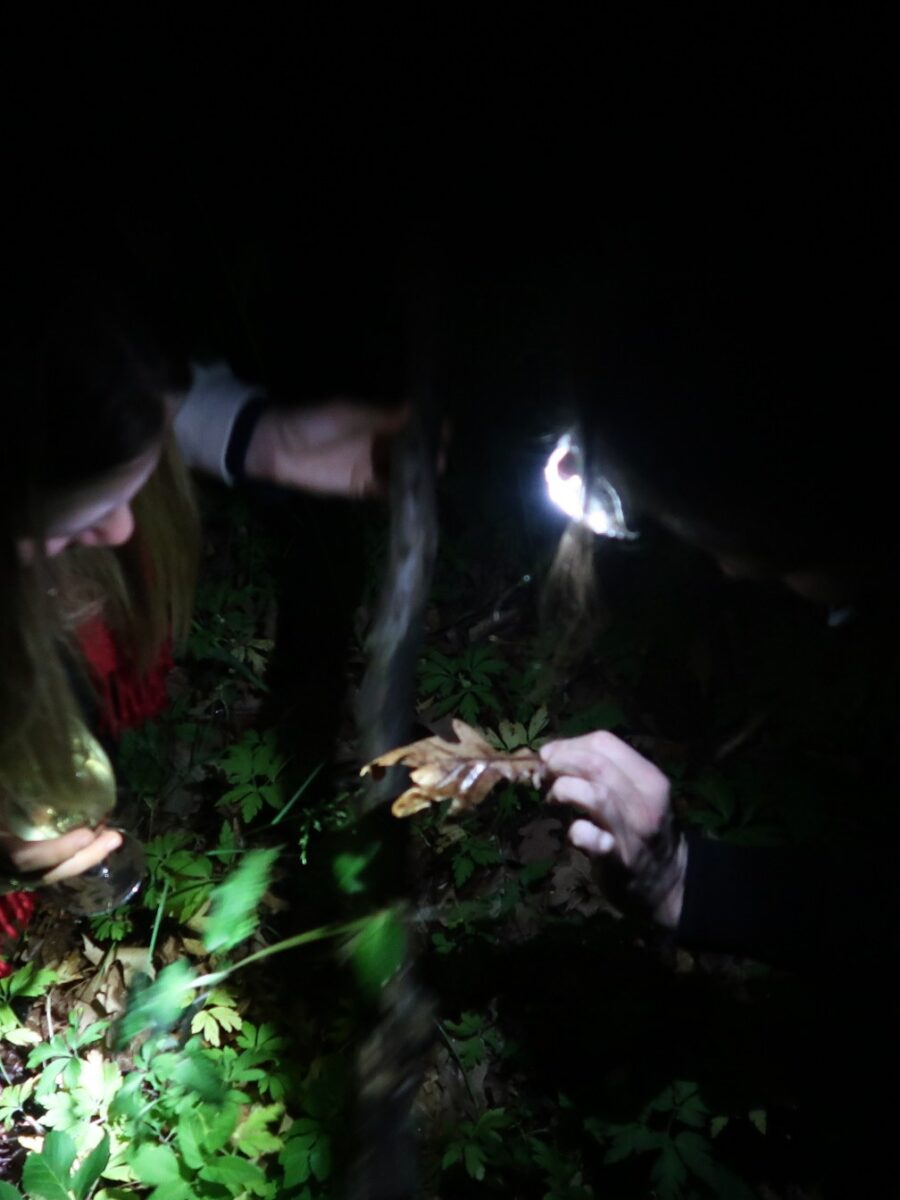
- Looking for a Slime Mould, Vojtěch Liebl: a night search with headlamps
- Alliance Imagining, Tamara Spalajković: staying with one being at the edge and reflecting on how we anthropomorphise it
Tending the edges across disciplines
Two invited guest lecturers showed us how their disciplinary fields read the edges. Landscape ecologist Eva Semančíková introduced Ecosystem and Habitat Boundaries in Landscape Ecology: how natural and cultural factors overlap at different scales and create the edges of a landscape. In Living Edges of Dead Fields, hydrologist Radomír Studený took us from the drained, pesticide-laden margins of conventional fields to a constructed wetland that filters the runoff while giving plants and animals somewhere to actually live. We learned how to plug a drainage pipe and met the kuňky (fire-bellied toads) of the marsh.
Weaving the Almanac
On the last morning, we planned how our experiences will become chapters of the Multispecies Research Almanac: Methods from the Field, our collaborative hand(paw, claw)book of methods. Each chapter will present a method together with its author’s reflection on how others put it into practice, the reflections of those who tried it, and sketches, photographs, sound and video from the field.
Edge Effects builds on its 2025 edition, Perma~cultural Thinking in Multispecies Research, where we first mapped our methods and took them for a walk in the Kluk forest near České Budějovice. The Almanac will keep growing through the third field workshop in 2027. It will be published in autumn 2027 by NAVU, the AVU Publishing House, and presented at the Ars Biologica festival 2028 in České Budějovice.
Participants: Anna Böhmová, Enrique Encinas, Susanne Kass, Sophia Klink, Ondřej Konrád, Vojtěch Liebl, Alžběta Petrův, Karolína Plášková, Catherine Radosa, Gabriela Sojková, Polina Valerijivna Šyškina, Kateřina Šípová, Karolína Tomanová, Jojanneke van Duijn, Filip Vedra, Chen Wang, Magdalena Wutkowska.
Guest lecturers: Eva Semančíková, Radomír Studený.
Organised by: Markéta Dolejšová & Tamara Spalajković, within the Ars Biologica Independent Studies programme, České Budějovice – European Capital of Culture 2028, in collaboration with the Multispecies Ecologies & Practices research group, AVU.
🫶 A warm thanks to all participants, to the Budweis 2028 team for production support, and to the Institute of Microbiology of the Czech Academy of Sciences for hosting us at Nové Hrady castle.
Markéta Dolejšová

Markéta Dolejšová is a practice-based researcher working with embodied and sensory approaches to explore meaning-making across human and other-than-human bodies. Her recent focus has been on ferality and feral eco-systems, exploring what relations, intuitions, and ways of knowing can emerge in the liminal spaces between the wild and the domesticated, the familiar and unknown, the serendipitous and intentional. She is affiliated as an Assistant Professor at The Academy of Fine Arts in Prague, where she acts as the Head of Doctoral Research Department and leads the Multispecies Ecologies and Practices research group. Earlier, she was a postdoctoral research fellowpost at Aalto University – School of Arts, Design and Architecture (2020-24). In 2020-22, she worked with the CreaTures – Creative Practices for Transformational Futures project, where she led the Laboratory of Experimental Productions and co-created the CreaTures Framework setting out how creative practices can stimulate action towards socially and ecologically sustainable futures. She co-founded several art & design research initiatives, including the Uroboros festival, the Open Forest Collective, the Feeding Food Futures network, and the HotKarot & OpenSauce. Since 2025, she has been co-directing the ABIS – Ars Biologica Independent Studies, an international educational programme connecting experimental art, design, technology, and science to explore how different disciplinary perspectives can inform collective engagement with living landscapes.